01 · ENERGY
Commercial & industrial solar
Make energy a competitive advantage.
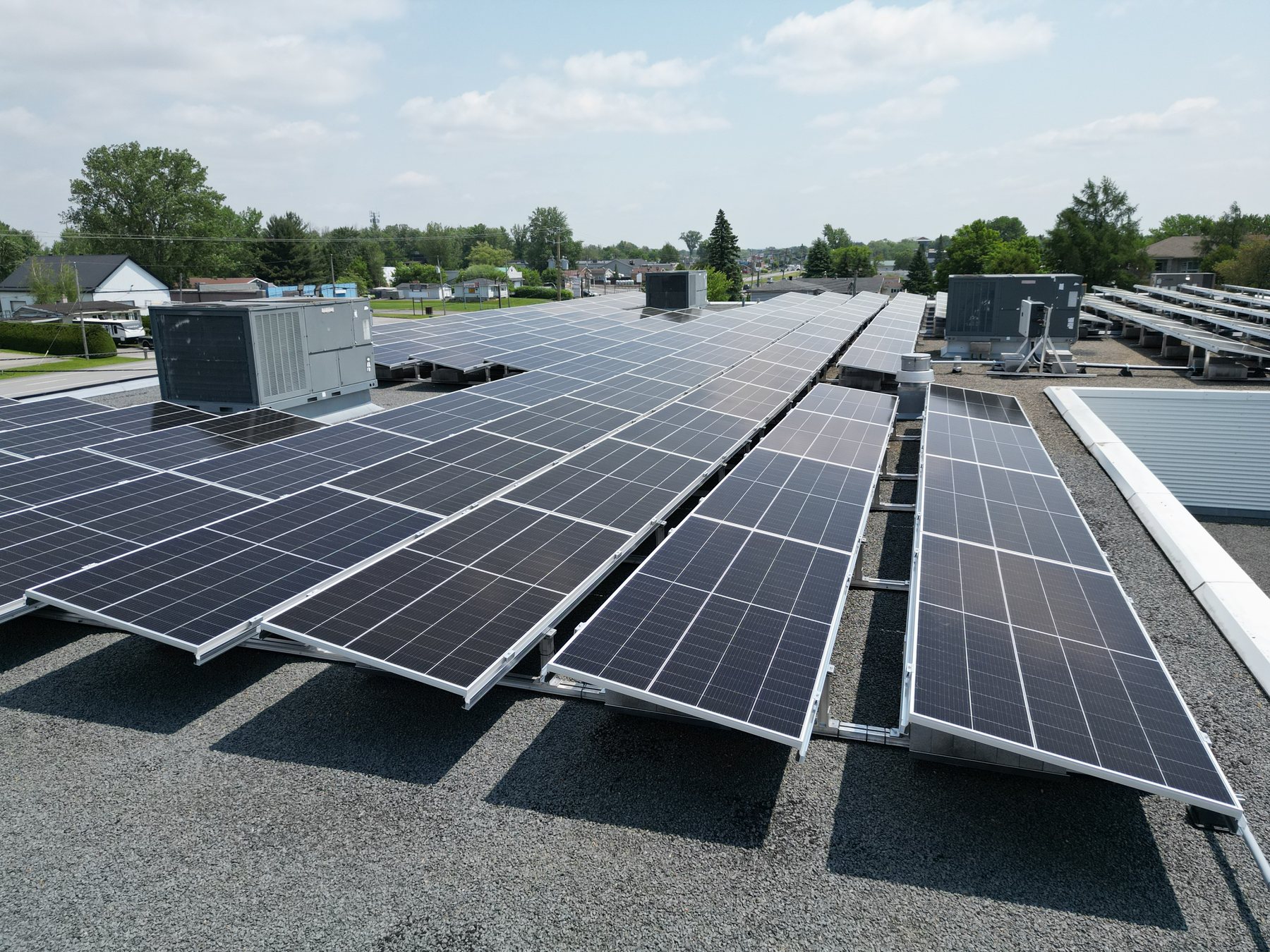
A complete solar delivery model for active commercial and industrial facilities, engineered around operating constraints and long-term performance, with Canadian Solar TOPBiHiKu7 725-730 W bifacial TOPCon modules as a principal reference line where project conditions and supply allow.
Discuss a solar project CAPABILITY
Commercial & industrial solar
LOAD-FIRST SOLAR ENGINEERING
Understand the load.
Engineer the advantage.
A commercial solar project begins with the operation—not a module count. We align generation, electrical architecture and construction planning with the facility's consumption profile, physical constraints and financial priorities.
Assess
Review consumption, utility bills, interval data, available areas, structural conditions and expansion plans.
Engineer
Define array layout, electrical architecture, protections and production expectations around site realities.
Coordinate
Manage project documentation, interconnection requirements and CFE coordination within the agreed scope.
Deliver
Schedule equipment supply, installation, testing and commissioning around an active commercial facility.
725–730 WReference module power
Up to 23.5%Module efficiency
−0.29% / °CPmax temperature coefficient
30 yearsLinear performance warranty
COMPLETE PROJECT DELIVERY
From first bill.
To verified production.
Soluxion Verde can coordinate the commercial solar pathway from early feasibility through commissioning, using equipment and construction strategies selected for the project rather than forcing every site into the same template.
REFERENCE TECHNOLOGYCanadian Solar TOPBiHiKu7
725–730 W N-type bifacial TOPCon, dual-glass modules provide a high-power reference line with strong hot-climate performance. Final equipment selection remains project- and supply-specific.
Feasibility
Consumption profile, site review, preliminary production and commercial objectives.
Detailed engineering
Structural, electrical, protection, layout and constructability definition.
Supply + installation
Equipment procurement, site logistics and execution around operating constraints.
Commissioning
Testing, documentation and performance-focused handover.
Operate + expand
Monitoring and a clear path toward storage, managed charging or future capacity.
Energy yield, savings, interconnection pathway, warranty coverage and final equipment depend on the engineered configuration, site conditions, tariff structure, utility requirements and applicable manufacturer documentation.
NEXT SOLUTION
Continue exploring